
Back in July 2023 the RAF Holmpton – Visit The Bunker Facebook page uploaded a fantastic video titled ‘1960s relics’. The short 5-minute long clip exhibited a collection of vintage sweet and chocolate wrappers that had been unexpectedly found when searching above the mechanical ventilation ducts in the bunker’s plant room – a void space just big enough to fit a human hand! Given that Scotland’s Secret Bunker (a well-visited tourist attraction/museum near St. Andrews in Fife) was the same standard type of ROTOR R3 bunker I decided to grab the ladders and a flashlight for a nosey myself and see if there had been anything left over from the previous Cold War occupants.
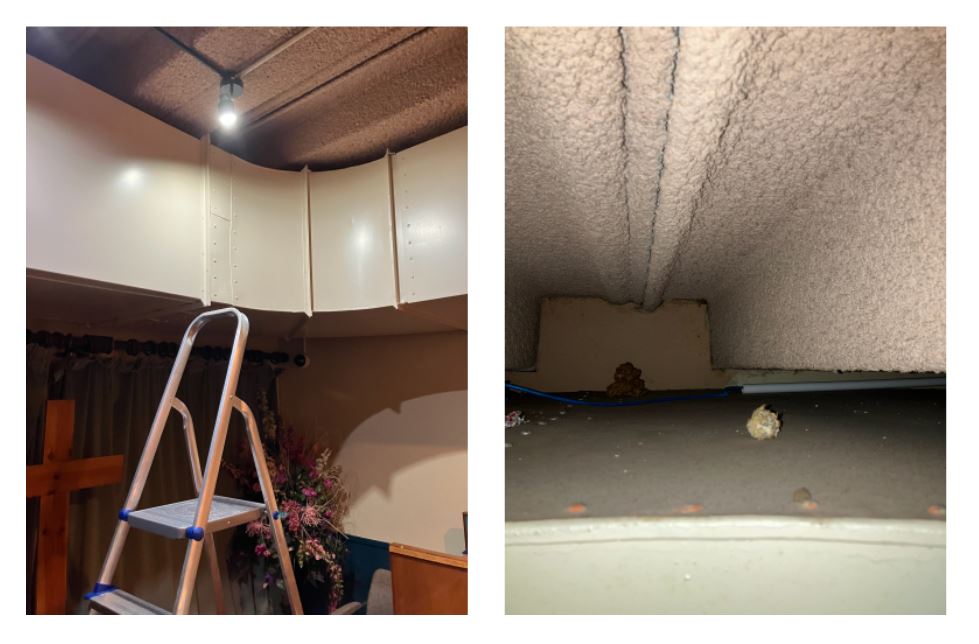
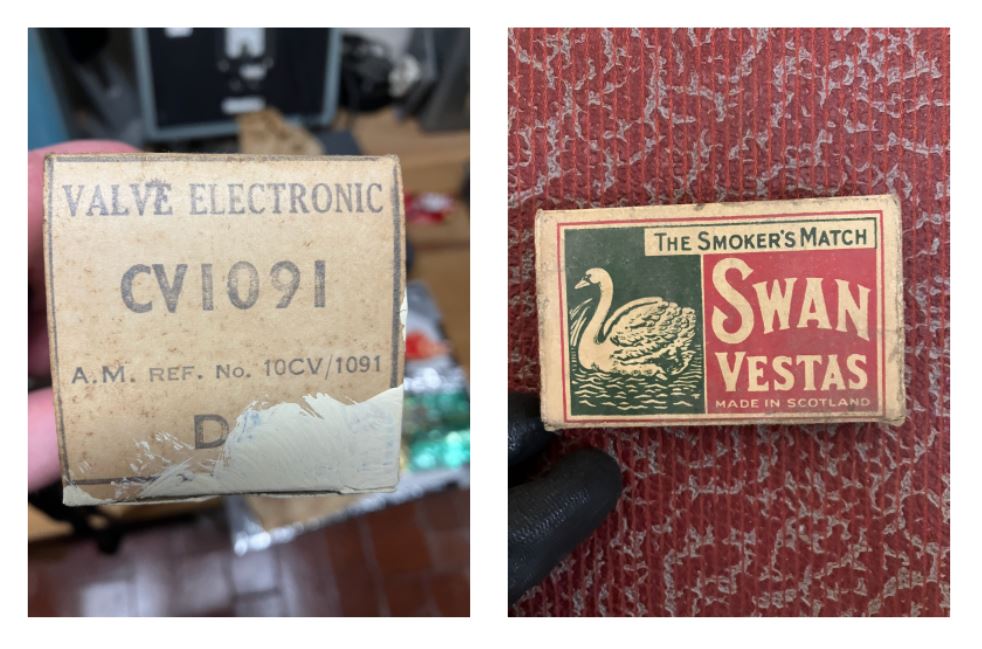
To my amazement the bunker, birthed as RAF Troywood, turned out to be full of what we have now coined “Bunker Treasure”. During my first foray up the ladders I somewhat hit the jackpot in discovering an old Penguin biscuit wrapper, torn KitKat packaging, half a Crunchie bar wrapper, an empty Air Ministry valve box, and a rare Swan Vestas matchbox. A collection, that with additional finds, would come to represent three Bunker Treasure categories: snacks, smokes, and works. First being the snacks which were consumed by the various personnel and staff working in the bunker during its active operations during the Cold War. Likewise, the second being the cigarettes they smoked on the job, and lastly the third being the (building) works conducted through 40-years of use. Collectively, items found within these three categories provide us with a previously undocumented human trace of the bunker’s historical occupation by the various RAF service men and women, GPO staff, civil defence volunteers, and Scottish Office civil servants.
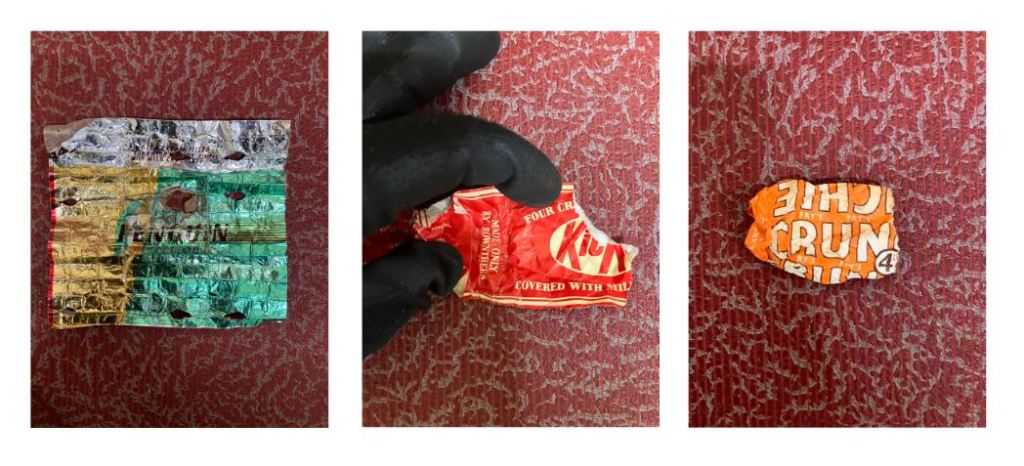
Eager to date the finds I contacted the History of Advertising Trust based in Norwich who were fantastically helpful in pinpointing a more exact timeline for the chocolate wrappers. Crucially, given that the Penguin, KitKat, and Crunchie wrappers all date to the 1950s, we can definitively place this “rubbish” as being left in the bunker by RAF personnel during their time on site – an occupation lasting from 1953 to (at least) 1957. Now, this is incredibly interesting. For although the bunker – architecturally similar to RAF Holmpton – was built with a designated mess for staff to eat their meals, these wrappers appear to have instead been sneaked into the other rooms containing highly advanced radar and communications equipment. Therefore, is it possible these bunker snacks were essentially considered as contraband items of food and as a result have been carefully hidden above the ducting, instead of being disposed in waste bins, so as to avoid being caught by the station officers. Say for instance, a KitKat, Penguin, or Crunchie bar had been forgotten on top of a radar console, and the intense heat generated from the equipment had melted the chocolate, it is likely the gooey mess would have leaked into the inner mechanics and damaged the unit. In fact, had this unit been knocked out of service for an unspecified period of time, the ROTOR radar air defence system would (albeit briefly) be vulnerable to a potential incursion by Soviet aircraft. In this scenario one would imagine a zero tolerance policy was likely in place prohibiting such chocolate snacks from being eaten anywhere except the designated mess.
As an additional site note, when researching the Penguin wrappers I was very excited to discover that the biscuit, still in production today, was originally a Scottish invention! For the biscuit was first introduced in Glasgow back in 1932 by the Glasgow baker William Macdonald who continued to make Penguins until United Biscuits (McVitie’s) purchased the brand in 1965. https://www.glasgowworld.com/retro/remembering-when-penguin-biscuits-were-produced-in-hillington-3837847
This small collection of finds gives a fantastic insight to those inhabitants who have long since vacated these bunkers; top-secret facilities no longer required for Cold War nuclear threats. Moreover, aside from the chocolate wrappers, the leftover Air Ministry valve further indicates the bunker’s historical equipment maintenance whilst the matchbox clearly shows that smoking was an activity very much conducted within the bunker.
The treasure hunt is currently ongoing and final results will be published in due course.
 Bunkerbuff