
Okay, I appreciate this may not strictly be recognised as Cold War bunker exploration, but I recently returned from a fantastic few days looking at the Vienna flakturms and feel the need to share my immediate thoughts/findings.
I initially became aware of WW2 flakturms present in Europe from Mallory and Ottar’s 1973 ‘Architecture of aggression: A history of military architecture in North West Europe 1900-1945’, furthered by an episode of Nazi Megastructures aired on National Geographic. So when I booked a spontaneous trip to Vienna with my brother, an opportunity presented itself to visit the surviving Austrian examples. Historically, these reinforced concrete surface bunkers were constructed in Berlin, Hamburg and Vienna to both defend against Allied air attack and provided shelter for the civilian population – up to 11,000 inhabitants as reported in some cases. These monolithic structures, commissioned by the Luftwaffe, were positioned in groups of two; the G-Tower (Gefechtsturm) operated as the ‘combat’ tower hosting the 20, 40 and 88mm anti-aircraft guns, while the L-Tower (Leitturm) was allocated as the ‘command’ tower, housing the radar equipment for tracking incoming aircraft. These paired groupings were positioned equidistant and triangulated at three sites across the city to maximise their effectiveness and give a strong sense of co-ordinated defence at the epicentre of Vienna. Design variations and site conditions aside, the flakturms were typically constructed of in situ reinforced concrete walls of approximately 11ft thick and stood roughly at heights of 155ft. At the end of the war, the decision to keep the towers seems largely down to the difficulties of demolition in the dense urban areas without damaging surrounding built fabric. The costs and dangers associated with their removal would have perhaps been too high for justification in a post-WW2 climate.
Before setting off for Vienna I had conducted my usual due diligence and preliminary research into where exactly the flakturms – or flak towers – were located and what they were currently being reused for. Some brief online fact-finding proved difficult in determining what structures were accessible, what condition they remained in, and what purpose they served in today’s built environment. Google satellite imagery and Street View only provided a snippet from a relatively recent timeframe. Instagram also depicted a general picture of the current situation, but overall there was a lack of information available to researchers of non-German speaking backgrounds.
After learning the Burghauptmannschaft Österreich (BHO) maintained the flakturms at the Augarten site, I contacted the authority responsible for the administration and supervision of historic buildings owned by the Republic of Austria, with a request to explore the structure’s closed-off interiors. As much as the BHO were extremely accommodating and helpful, I was informed the buildings were strictly off limits to the public due to safety concerns. Stumbling across a YouTube video of a more recent exploration inside these bunkers, the dangerous environments were clearly evident. Concrete floors and staircases appear significantly damaged with exposed rebar protruding from walls at various locations, ultimately leading to difficult manoeuvring around the building and limited balustrade protection.
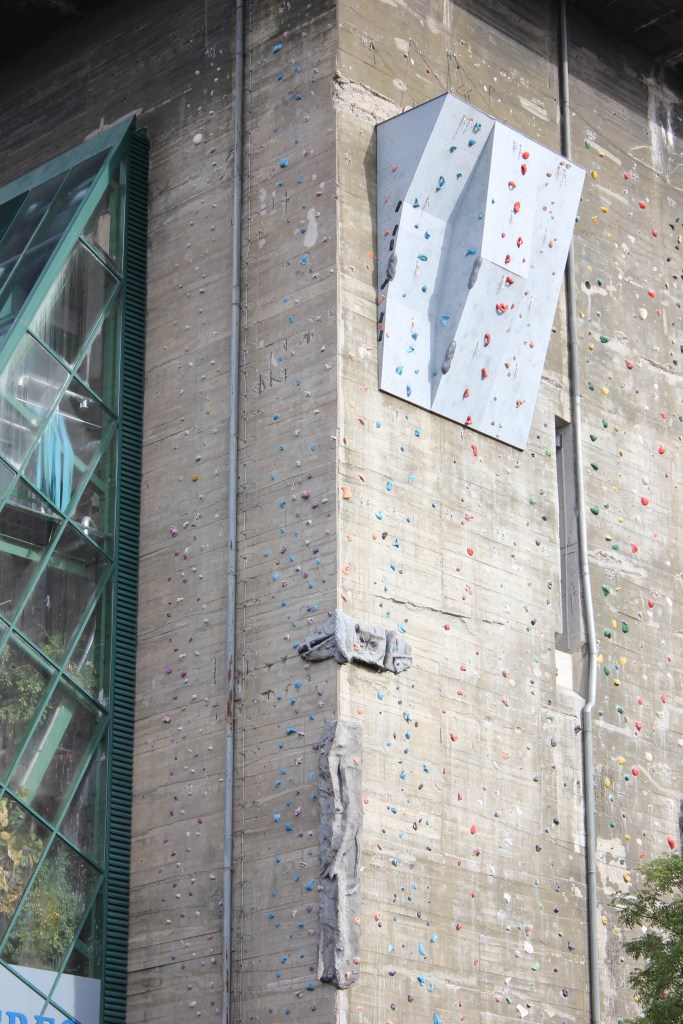
My preliminary research had also identified another flakturm that had been repurposed into a climbing centre. I tried booking a session at the ‘Kletteranlage’ (climbing wall), where a section of the surface bunker has been externally clad with climbing stones. My luck also seemed out here as the centre had just closed for the winter season; a mere two days before our arrival. The remaining flakturms appeared to be under private and civil ownership with only the Haus de Meeres (zoo and aquarium) fully – at least perceived to be – open to public.
Augarten
The flakturms at Augarten had been the more prominent examples I had found through my pre-trip research, so we set out to visit these on our first day. Riding the tram to the park’s edge we disembarked in the area north-west of the site. Paradoxically, the towers are not that easily seen from the western approach and are well concealed through both the city’s natural topography and foliage; sporadically offering brief glimpses above hedgerows or between trees.
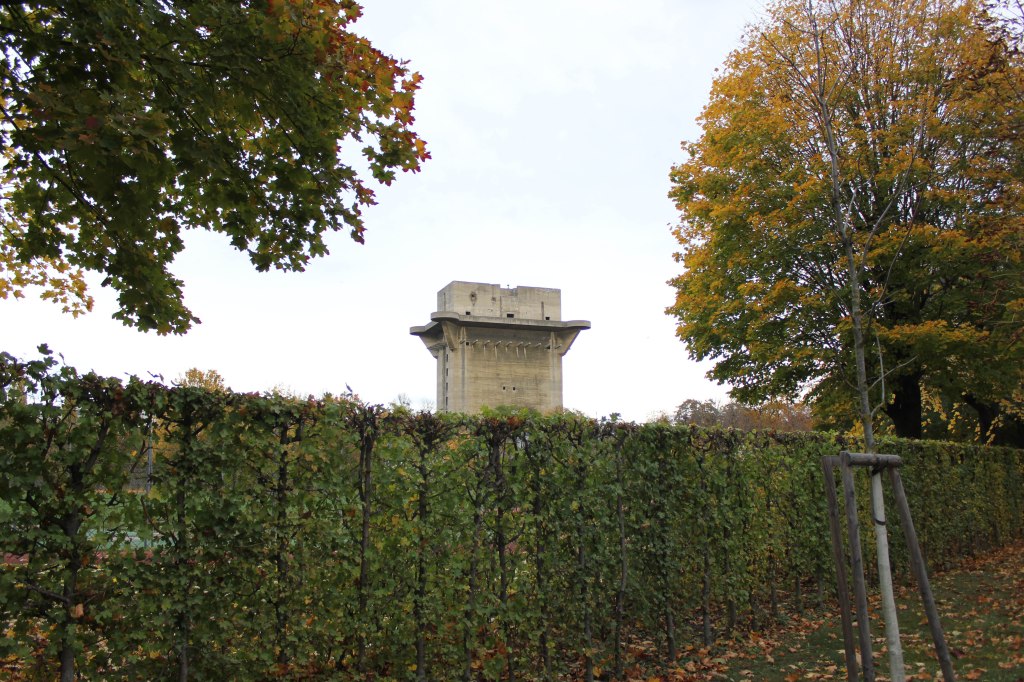
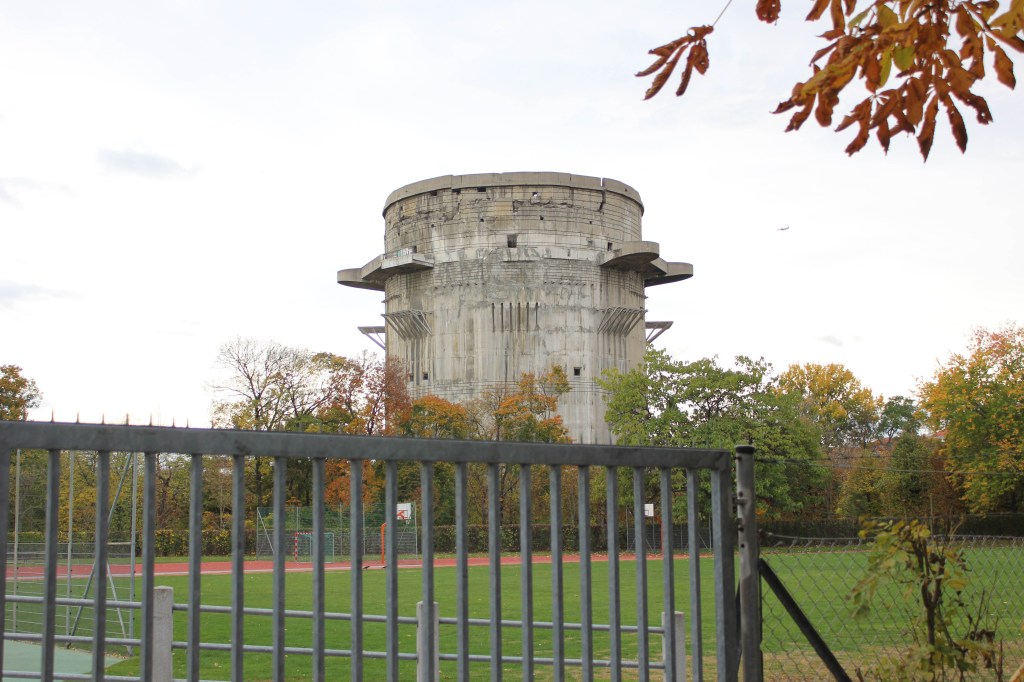
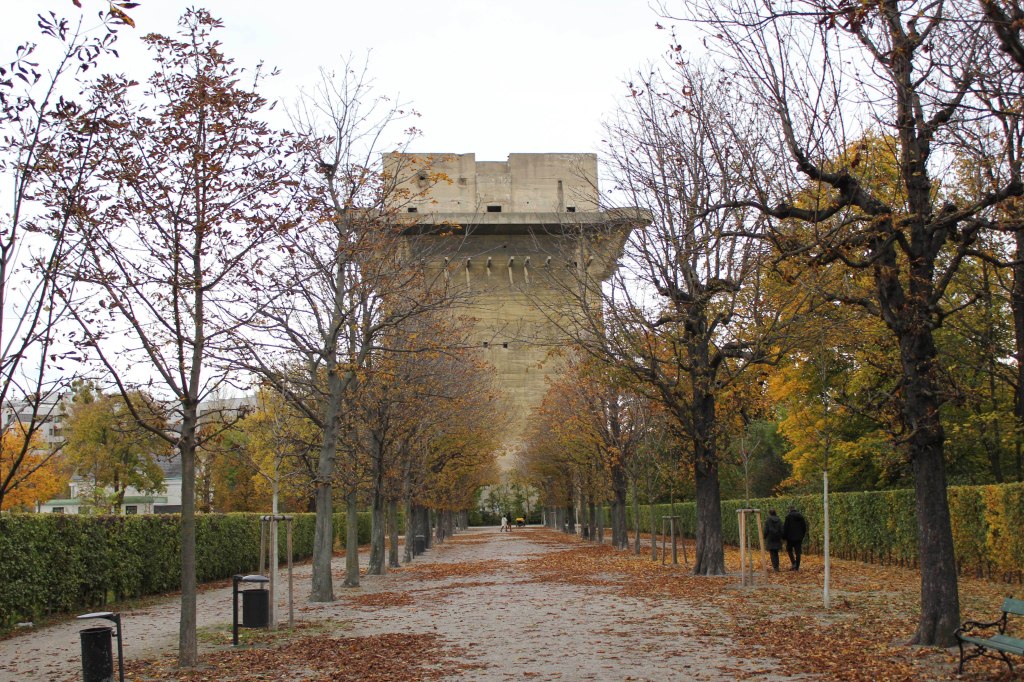
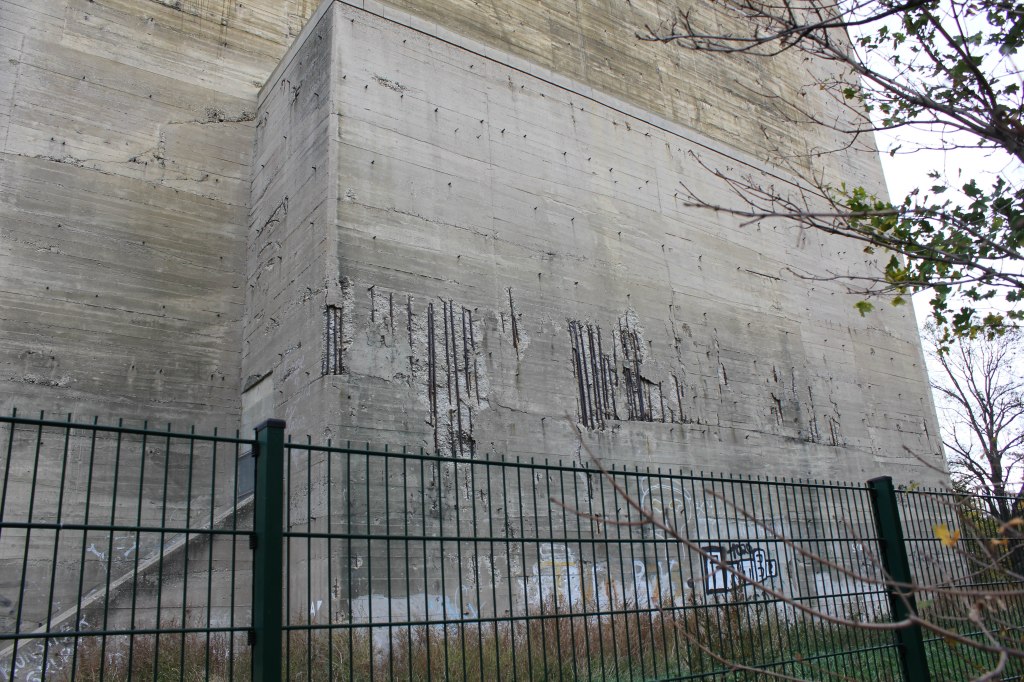
The park’s landscaping has been set out using the two towers as landmarks and clear points of reference, tree-lined avenues radiate from the flakturm’s bases and allow uninterrupted vistas of up to 800m through the lush green space. Much alike public parks across the globe, Augarten was bustling with people. Families were out for a Sunday stroll or flying kites in the grounds, while other groups played football or conducted ritualistic jogs. We seemed to be the only two people in the whole park to acknowledge the existence of these imposing concrete structures. Although they seemed well camouflaged at their boundaries, the surface bunkers were very much visible within the grounds of the park. At ground level, the flakturms ‘Peter’ and ‘Peter 2’ are now fenced off, but previous human intervention can be seen through the years of accumulated graffiti on external walls. The G-Tower (Peter) is currently supported with 12 steel cables running its entire circumference at assumed strategic points, indicating the structural integrity at high level is potentially at threat. Further sections at both bunkers show a layer of concrete almost peeling away in areas, exposing patterns of the reinforcement rebar expressed in a vein-like form. Years of weathering from the elements has left visible stains from rainwater that has cascaded down from the roofscape. Crows and pigeons seem to have taken full-time residence of the upper storeys, flying circular patterns overhead and occasionally peering out of the mesh that covers the seemingly tiny apertures. These once historically prominent buildings now belonged to the birds. As we left Augarten and headed back into Vienna’s centre along Obere augartenstraße, I continued to turn and see the flakturms drop in and out of the streetscape, never completely out of site.
Haus des Meeres
The only publicly accessible flakturm is south-west of the centre, just a short walk round from the busy shopping street of Mariahilferstraße. Pre-visit imagery of the Haus des Meeres showed significant structural alterations in the bunker’s conversion to aquarium and zoo that were completed in 2014. By now, the eastern elevation of the structure was shrouded in a glazed façade, encasing the previous extension and nearly doubling the building’s width. The climbing wall flanks the southern elevation whilst a glass wedge protrudes the north façade, paralleled with a steel fire escape staircase running the full height of the structure. A green living wall appears to grow on the north elevation whilst the rooftop has considerable contemporary additions, presenting an almost commercial office-like appearance at the summit.
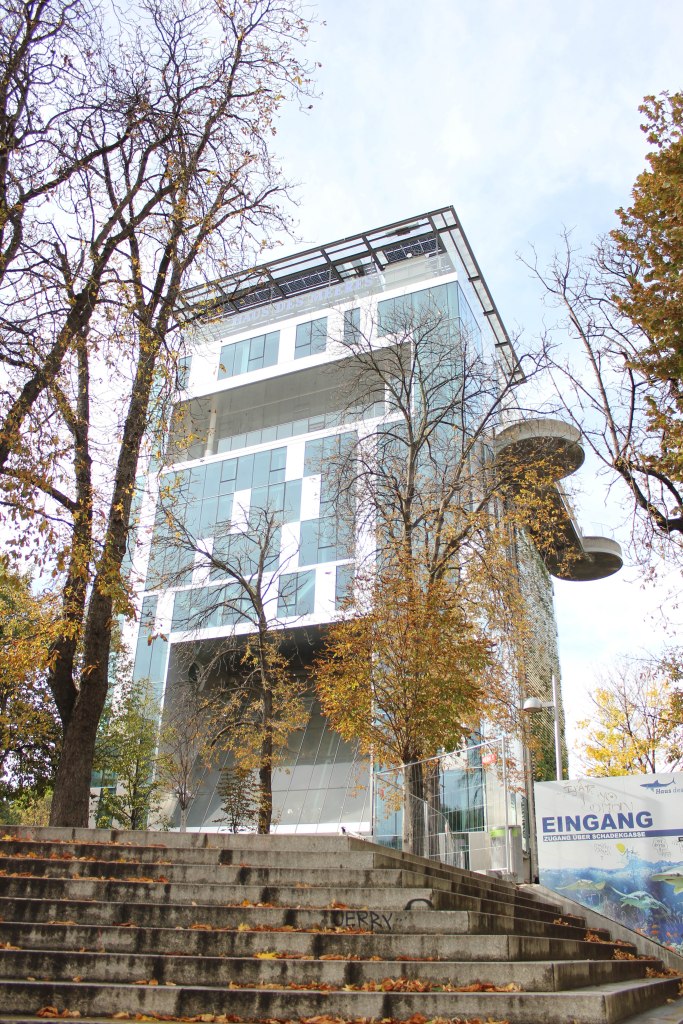
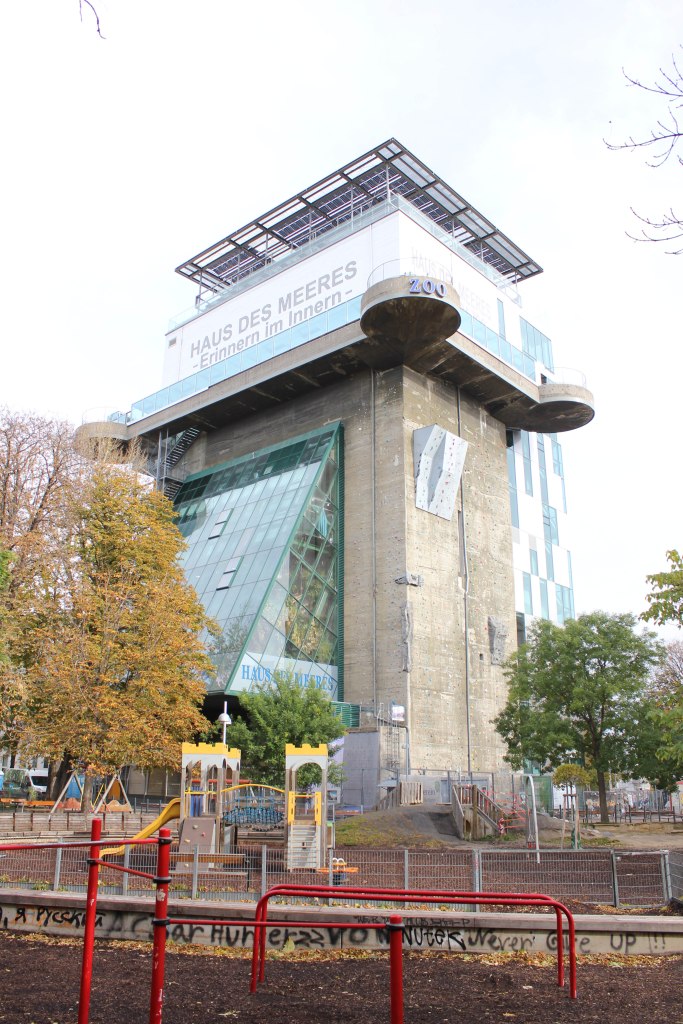
Inside the aquarium and zoo repurposing takes over and one struggles to see evidence they are indeed, inside a WW2 flakturm. Most of the vast services and climate-controlling infrastructure has likely dictated a plasterboard and ceiling tile finish to conceal wiring and ducting, leading the interior to feel similar to any conventional zoo/exhibition space. Some circulation zones along with the dedicated museum, do however appear to give subtle nods to its historical form; leaving small sections of exposed concrete textures.
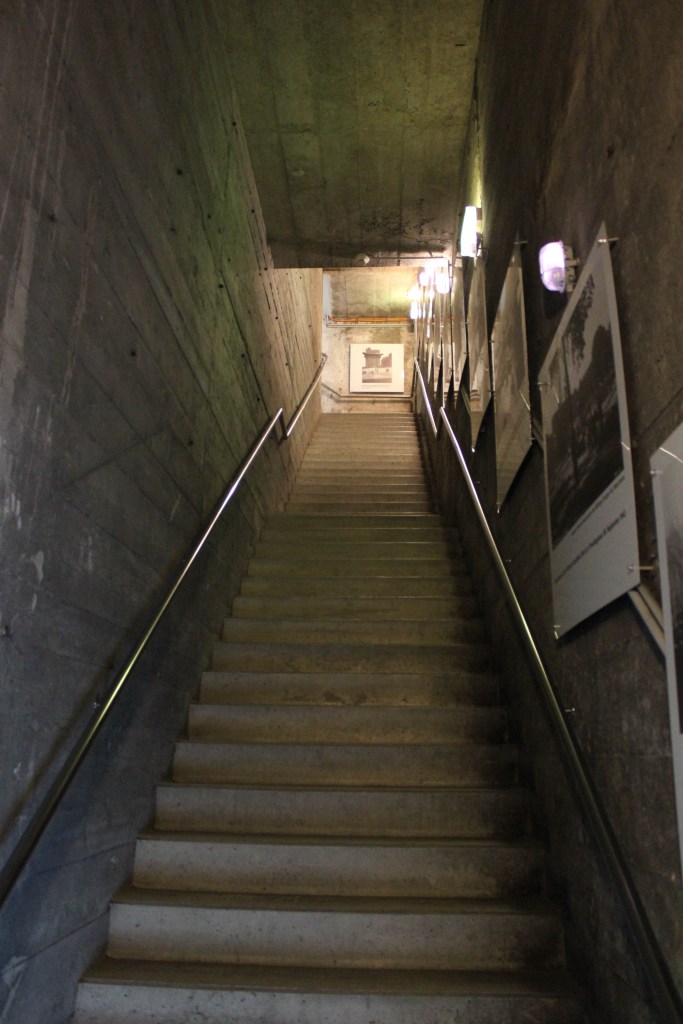
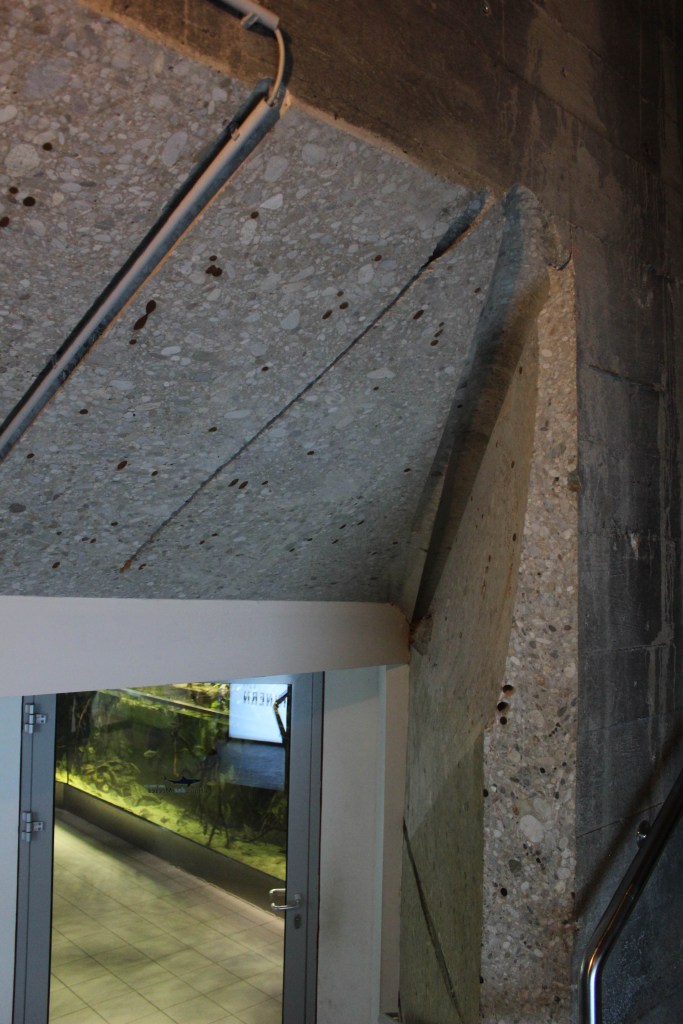
Frustratingly, the dedicated museum at 9th level is only open at specific times with advance booking required, so I had to settle for a glimpse through its locked glass door. However, the staircase leading to the museum is fantastic. It has been left in its original form allowing its in situ concrete construction to be experienced by the visitors. The wall is lined with construction photographs showing its formation stages over a year. At the bottom, a huge section of the 1940s concrete has been cored and cut to permit a circulation route through the new aquarium, here you can see a full-scale cross-section of the concrete structure, down to the coarse aggregates used in its original mix. Unfortunately, the upper rooftop terrace was also closed on our visit, but the level down is used as conference space and the city-wide views on offer looked incredible. An information board outside the main entrance details an on-going phased development plan for the building. I’m interested to see the final result of the work, perhaps the entire building envelope will be wrapped in time; completely hiding any evidence of the concrete surface bunker?
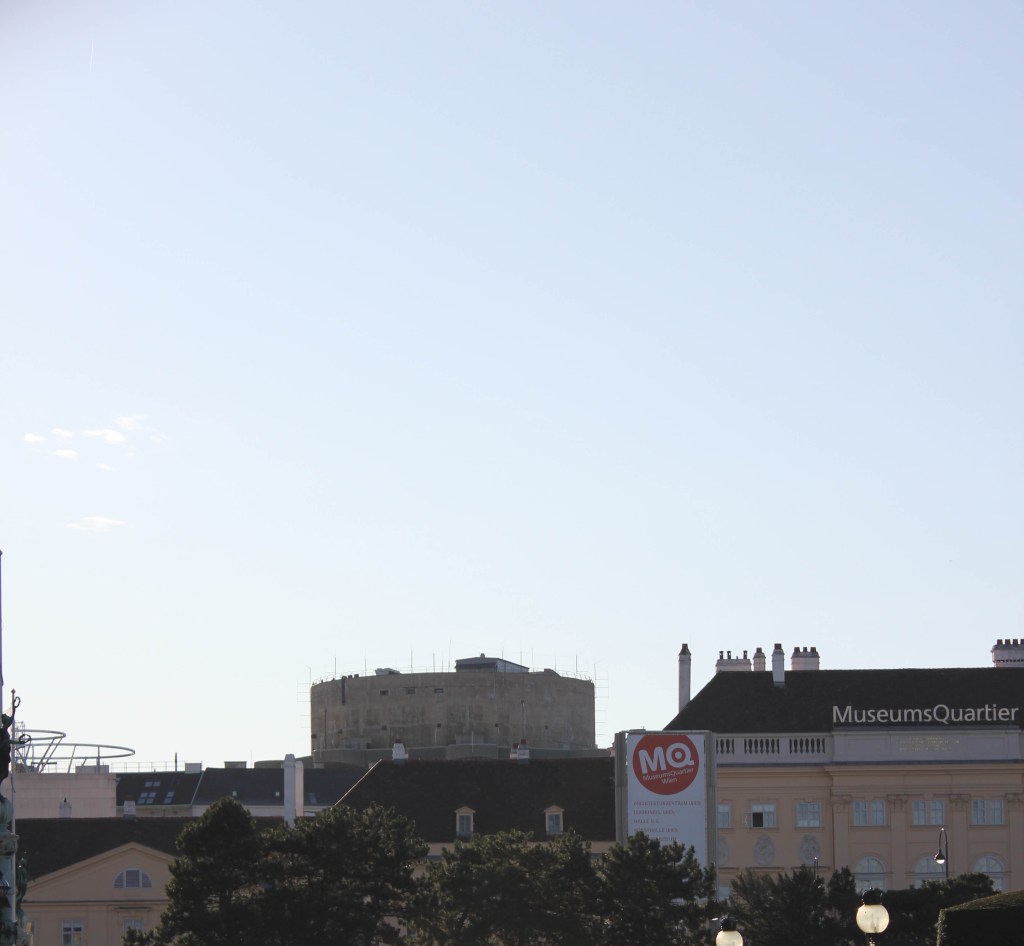
The paired G-Tower is located approximately 500 meters north-east of the site where I believe its current use is by the Austrian police. Whilst partaking in a kick-bike tour I was handed the opportunity of giving an impromptu history presentation to the group, I of course jumped at the chance, apparently giving a very informative account. Other than a couple of teasing glimpses from surrounding streets (ours was on Lindengasse), this flakturm feels almost completely hidden at proximity. Its immediate south, east and north elevations are concealed by the parliamentary complex, allowing the bunker to sit undetected in the middle of the inner courtyard, a mere stone’s throw from the busy Mariahilferstraße. For obvious height reasons satellite dishes and broadband transmitters have been affixed to the roofscape, but this new hi-tech equipment against the cold textures of WW2 concrete presents a rather unsettling material dichotomy. Again, Vienna’s topography hides this bunker well at close quarters, however, I did manage to stumble across another vantage point at the edge of Maria-Theresien-Platz. Looking backwards, amongst the groups of tourists dismounting sightseeing coaches, I could just make out the surface bunker’s top section protruding from the roofscape of the ‘Museums Quartier’. We seemed to be the only two who noticed this revelatory glimpse.
Arenbergpark
After checking out the hotel on our final day, we made our way to Arenbergpark to find the remaining two flakturms, fully completing the triangulated defence of Vienna. Taking the underground only temporarily shielded us from the torrential rain, and when we finally arrived it proved extremely difficult to take photographs without getting my camera soaked in the downpour. Both structures are set within a well-manicured recreational park, complete with picnic benches, public toilets, children’s playpark and dog walking zones. There is also an underground car parking facility around the periphery.
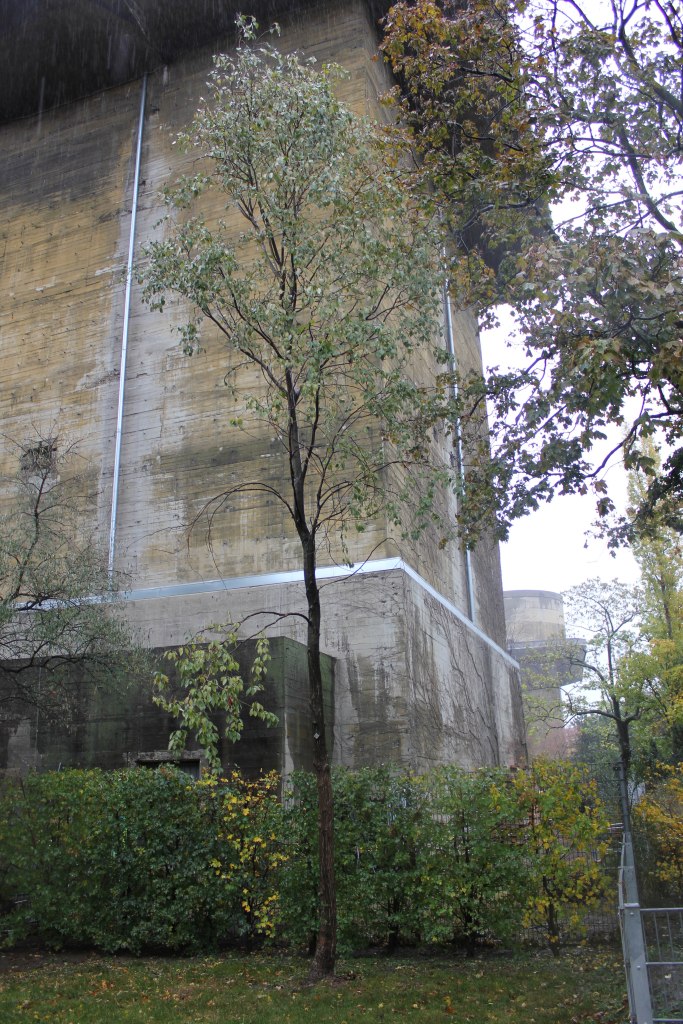
Although flakturms across the city varied in design it was more visually evident here and the towers are clearly located closer together than any other pairings. Nestled in amongst luxurious Viennese apartments, the surface bunkers also seem tactically concealed through planting as noted at Augarten. The G-Tower’s reuse seemed active, receiving a lorry delivery as we passed. Upon further investigations this appears to be part of the MAK Contemporary Art Collection – referred to as ‘MAK tower’. The venue seems to have operated as an event and installation space since 1995 but has been closed to the public as of 2014, now existing in a reduced capacity as a storage depot. The other L-Tower seemed less active, but its boundary was heavily populated with allotment-style plantations and timber sheds indicating an urban gardening operation. The overall park appeared to be a popular dog walking zone for neighbouring residents who exchanged perplexed looks as I took photographs – albeit under the cover of my fleece used as a make-shift rain cover. After exploring the exteriors and struggling to take some decent shots (I urgently need a new wide-angle lens) we left the site and headed west towards the city centre. Bunker exploring can make hungry work and our last stop was lunch before catching our flight back to Scotland.
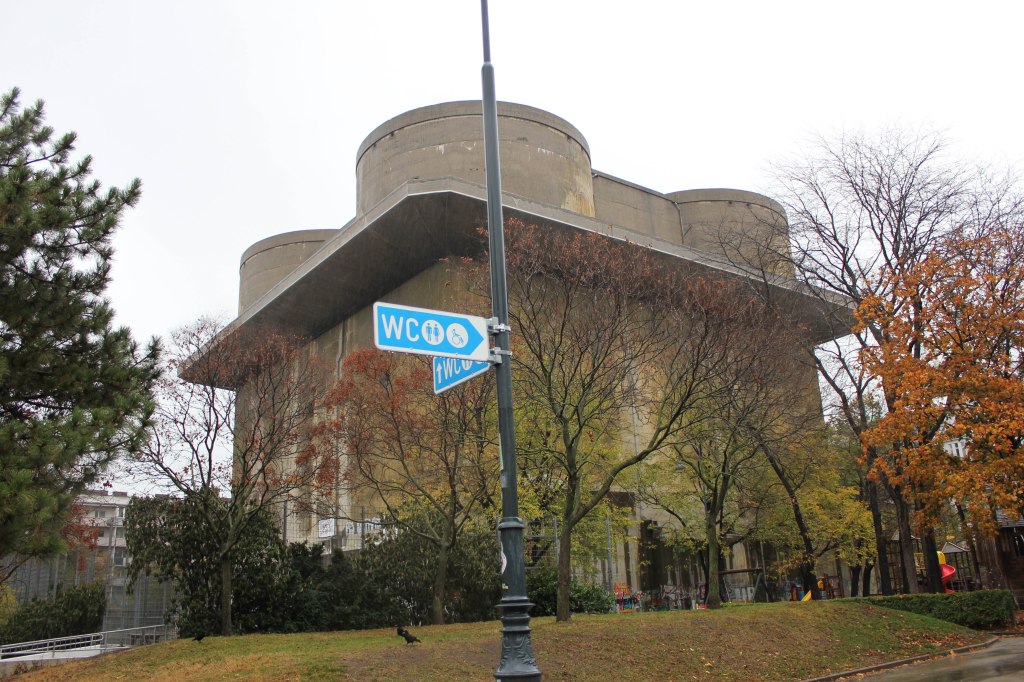
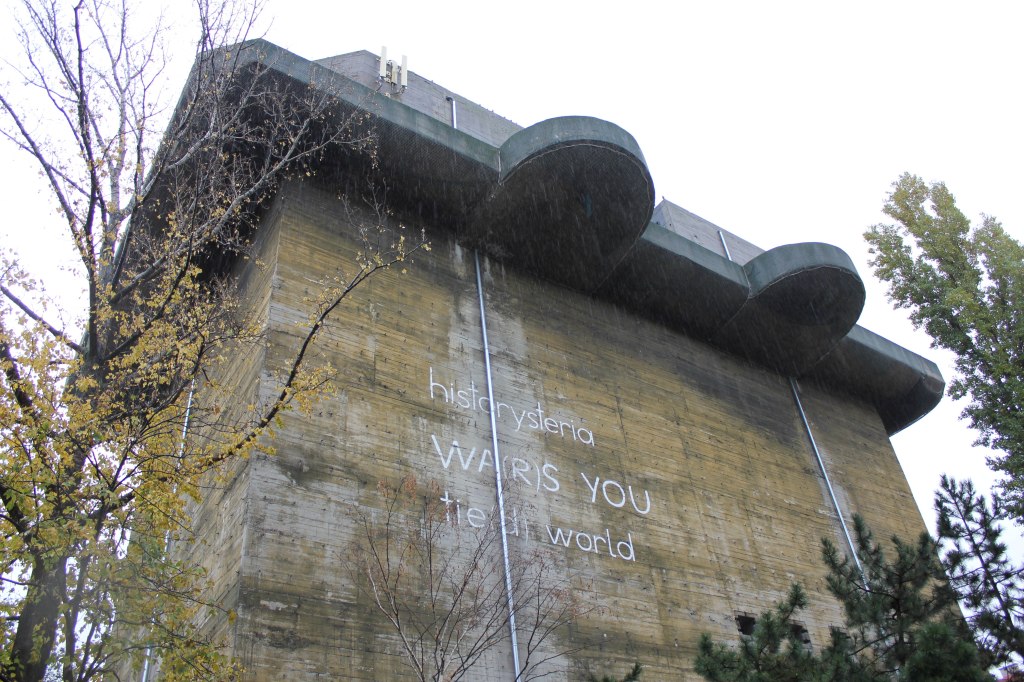
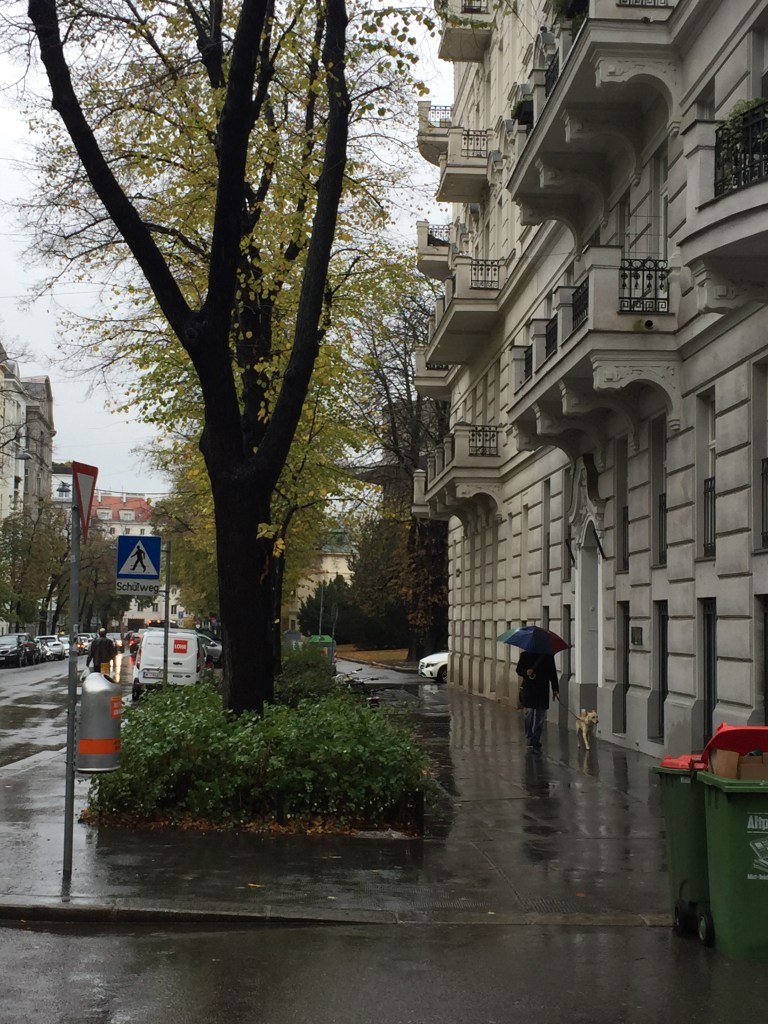
Leaving Arenbergpark I was conscious of turning to see how the huge flakturm bunkers disappeared behind me. Once again, they paradoxically seemed to be swallowed by the foliage and urban fabric of their smaller-scale surroundings, blending as though their design and planning has been a perma- camouflage since conception…
 Bunkerbuff